

When Tatiana Maslany was 20 years old, she questioned whether acting was truly her calling. The Canadian, who had started working as a youngster, was 11 years into her career and had recently moved from Regina, Saskatchewan, to Toronto in order to be closer to the employment opportunities. She explains, “All of a sudden, I felt this impulse to reconsider why I was doing it. Was I just acting this way because it was something I used to do as a child? But after that, she saw the 1974 movie A Woman Under the Influence, directed by John Cassavetes, in which Gena Rowlands’ suburban housewife approaches her breaking point. “And I said to myself, ‘Yes, that’s it! She cries, “That’s what I want! “I desired that degree of independence, creativity, presence, and connection. I was shown what was conceivable by the movie.
Maslany, who is now 36, has hardly ever stopped throughout that time. Her career has taken her from Nicole Kidman’s burnt-out detective in the neo-noir film Destroyer to the Broadway production of Lee Hall’s Network, where she co-starred with Bryan Cranston, to the sci-fi series Orphan Black about a group of clones, where she played 11 roles simultaneously (and won an Emmy for her efforts).
She-Hulk: Attorney at Law, a new Disney+ series from Marvel, now features her as its star. Because of how secretive the project is, preliminary episodes have not yet been made public as of this writing. Even Maslany, I’m told, has a certain amount of confidentiality. “But I sort of prefer it because, as viewers, we all love a surprise, right?” she says.
Maslany is speaking from her Los Angeles home, where she has lived since 2017, where she is seated next to an open window with billowing white curtains in the background. She has a profusion of reddish-blond curls in her normally black hair. She can only tell this about She-Hulk: “Something happens that renders her superhuman, and the plot follows her fight with this thing,” she says of Jennifer Walters, who is a lawyer in the beginning of her profession. This thought of becoming a superhero feels unfamiliar and disorienting rather than empowering. “How human and unheroic she is, and how little interest she has in pursuing all that, is what intrigued me to the character,” the actor said of the role.
Her co-star Mark Ruffalo, who has portrayed Bruce Banner for ten years and is Jennifer’s cousin, taught her the tricks of the Hulk, and she enjoyed smashing things up with him. “He’s such a wonderful man, and he views the world with a childlike delight. But what truly makes him stand out as Hulk is his athletic agility and character clarity. The two became close over their technologically advanced, but very peculiar-looking outfits, which detect their facial emotions and movements and enable them to appear transformed, but still who they are, on television. She laments that “we were in these small grey clothes” while “everyone else got these very fantastic superhero attire.”
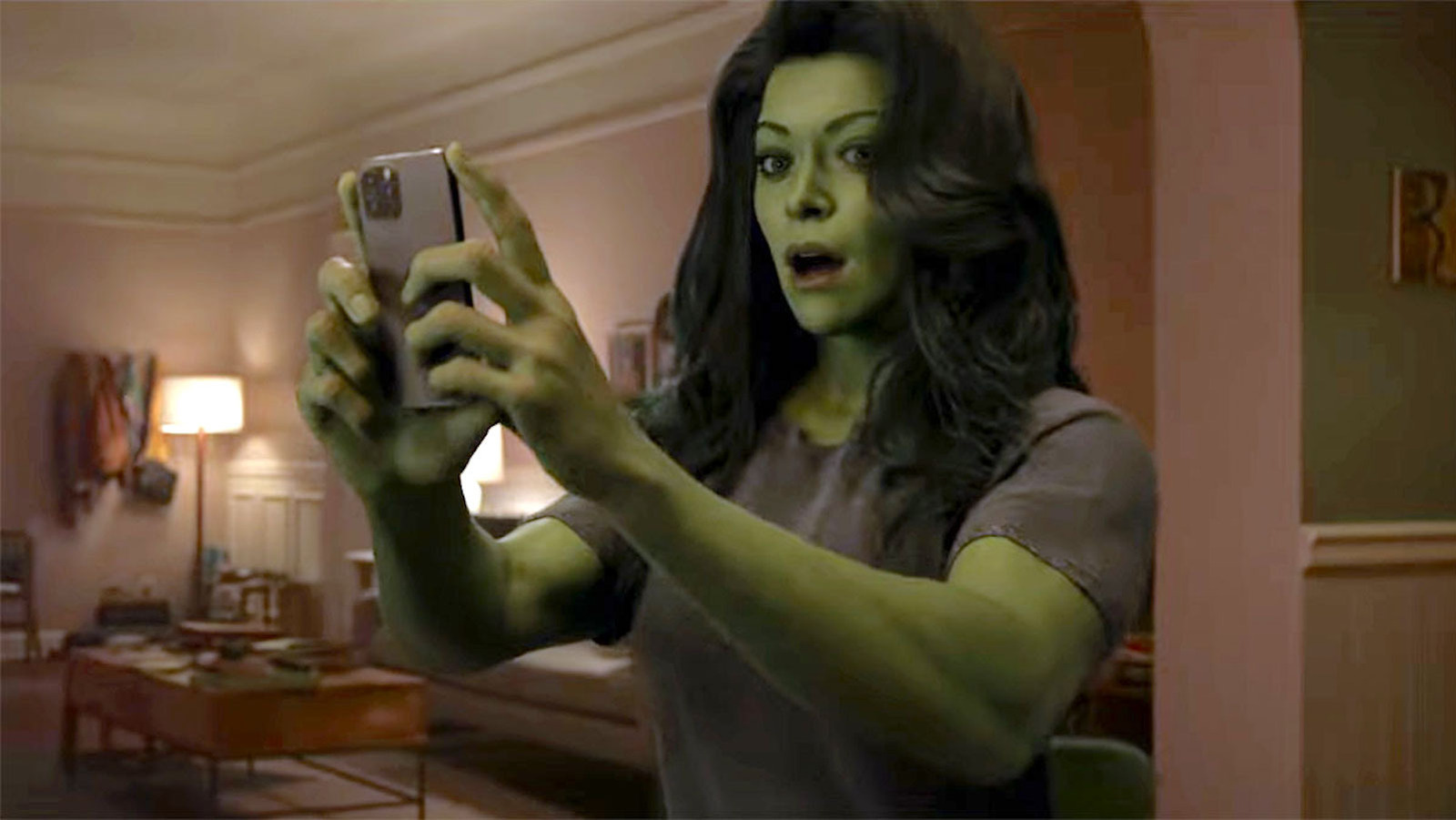
The She-Hulk style of Maslany is very different from the early comics’ depictions of the green goddess bursting through her clothing. The few female superheroes who were around at the time seemed to be there solely to titillate the male public. It took Natasha Romanoff, a.k.a. Black Widow, played by Scarlett Johansson, an entire 11 years to have her own film, indicating that Marvel Studios has been sluggish to restore the balance. Maslany claims that there are references to how female Marvel characters have been treated in the past in the She-Hulk script, which was written by Rick and Morty’s Jessica Gao.
“She has suddenly acquired this aesthetic worth. She is reduced to a symbol because she is a superhero. However, I absolutely believe there has been a paradigm change. It requires patience and involves coming up with fresh methods to communicate stories. The fact that it seems so strongly – if I may use a binary phrase – feminine is what made me think, “Oh OK, this feels fresh and startling.” It has a girly quality about it. Although that phrase is frequently used in jest, I find She-Hulk to be a wonderfully delightful celebration of female camaraderie.
She continues by saying she looks forward to the day when it won’t be shocking to see a woman portray a superhero. “I’m very interested in when these [marginalised] voices get the opportunity to speak without it being like: ‘Oh my God, it’s all women,’ or ‘Oh my God, this is a narrative about a gay couple,’ and those tales become as intrinsically expected as they are now special,” the author said. Because it is reductive, she has always found the “strong female lead” cliché annoying. It is just as much of a shearing off of all the subtleties and trope. Nobody can fit inside of the box. The term alone is annoying. It seems as though we should be appreciative of the opportunity to be that.
Maslany seldom recalls a period of life during which she wasn’t performing. From the age of four, she began studying tap dancing before soon advancing to theatre and improv: “My mum was like, ‘Well, you’re definitely not a sports person. It appears that this is what you want to accomplish. Her early roles in Canada were primarily in regional theatre and children’s television; she made her acting debut in the 2004 film Ginger Snaps 2: Unleashed as the Ghost who is infatuated with comic books.
 Pop Celebrity Fashion